My chocolate has a dusty white coating — is it safe to eat?

4. How Bloom Affects Taste, Texture, and Quality
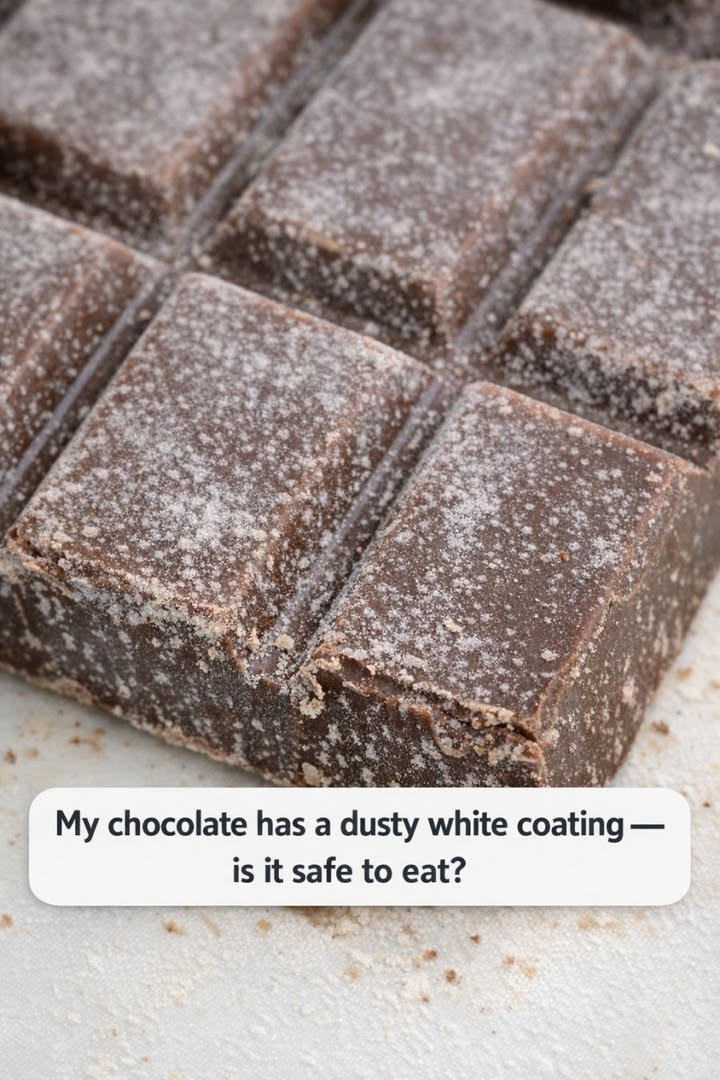
While bloomed chocolate is safe to eat, it may not provide the optimal chocolate experience. The main impact of bloom is on the texture and appearance of the chocolate. Fat bloom can make the chocolate appear dull and streaky, and it may disrupt the smooth texture that is characteristic of well-tempered chocolate.
Sugar bloom, on the other hand, can have a more pronounced effect on taste and mouthfeel. The recrystallized sugar can give the chocolate a gritty texture, which may be unpleasant for some. However, the actual taste of the chocolate remains largely unaffected, apart from the change in texture.
5. Common Reasons Your Chocolate Developed a White Coating
Chocolate bloom can occur due to several common factors. One primary reason is improper storage, particularly in environments with fluctuating temperatures or high humidity. For example, storing chocolate in a kitchen cabinet near the stove or in a refrigerator where it can absorb moisture can result in bloom.
Another common cause is handling chocolate with wet or warm hands, which can introduce moisture or heat to the chocolate surface, leading to sugar or fat bloom. Additionally, if chocolate is exposed to direct sunlight or stored near a heat source, it may develop bloom as the cocoa butter melts and resolidifies unevenly.
6. How to Tell Bloom Apart From Mold or Spoilage
To differentiate bloom from mold or spoilage, examine the chocolate closely. Bloom is typically a uniform, whitish coating that does not significantly alter the chocolate's smell. Mold, however, can appear in various colors, such as green, blue, or black, and may have a fuzzy texture. Mold also tends to emit an off-putting odor, unlike bloom.
If your chocolate has a strange smell or visible mold, it's best to discard it. However, if it only has a white coating and no unusual odor, it's likely just bloom and safe to consume.
7. Simple Ways to Fix Bloomed Chocolate at Home
If your chocolate has developed bloom, there are a few simple methods to restore its appearance. For fat bloom, gently melting and re-tempering the chocolate can help redistribute the cocoa butter evenly and eliminate the white streaks. Use a double boiler or microwave at low power to melt the chocolate slowly, and then allow it to cool gradually to restore its shine.
Sugar bloom is more challenging to fix, as the sugar crystals have already formed on the surface. However, you can try melting the chocolate and using it in recipes where texture is less critical, such as in baking or making ganache.
8. Storage Hacks to Prevent Chocolate Bloom in the First Place
To prevent chocolate bloom, store chocolate in a cool, dry place away from direct sunlight and heat sources. Ideally, chocolate should be kept at a consistent temperature between 15-18°C (59-64°F) with a humidity level below 50%.
Avoid storing chocolate in the refrigerator unless absolutely necessary, as the moisture can lead to sugar bloom. If you need to refrigerate chocolate, wrap it tightly in plastic wrap or an airtight container to minimize moisture exposure. When removing chocolate from the refrigerator, allow it to come to room temperature before unwrapping to prevent condensation.
9. Does Bloom Change Chocolate’s Nutrition or Shelf Life?
Bloom does not significantly alter the nutritional value of chocolate. The primary components of chocolate, such as cocoa solids, sugar, and milk, remain unchanged. However, bloom can affect the perceived quality and texture, which might influence how much you enjoy it.
In terms of shelf life, bloom does not necessarily shorten the time chocolate remains safe to eat. Chocolate can last for several months to a year if stored properly, even with bloom. However, if chocolate has been exposed to extreme temperature fluctuations or high humidity, it might deteriorate faster, so it's always good to perform a smell and taste test before consuming.
10. When You Should Definitely Throw Chocolate Away
While bloom itself is not a reason to discard chocolate, there are certain signs that indicate chocolate should not be consumed. If chocolate has a rancid or off smell, visible mold, or an unusual taste, it should be thrown away. These signs suggest that the chocolate may have been contaminated or spoiled.
Additionally, if the chocolate has been stored in unsanitary conditions or has come into contact with potential allergens or contaminants, it's best to err on the side of caution and discard it.
11. What Chefs and Chocolatiers Really Do With Bloomed Chocolate
Professional chefs and chocolatiers often have techniques to deal with bloomed chocolate, ensuring that it doesn't go to waste. When chocolate blooms, they may remelt and re-temper it, especially if the chocolate is of high quality and worth salvaging. Re-tempering can restore the chocolate's original luster and texture, making it suitable for use in fine chocolate work.
In cases where re-tempering isn't practical, bloomed chocolate can be repurposed in recipes where appearance is less important, such as in baking, making sauces, or incorporating it into fillings. By doing so, chefs and chocolatiers minimize waste while still delivering delicious creations.