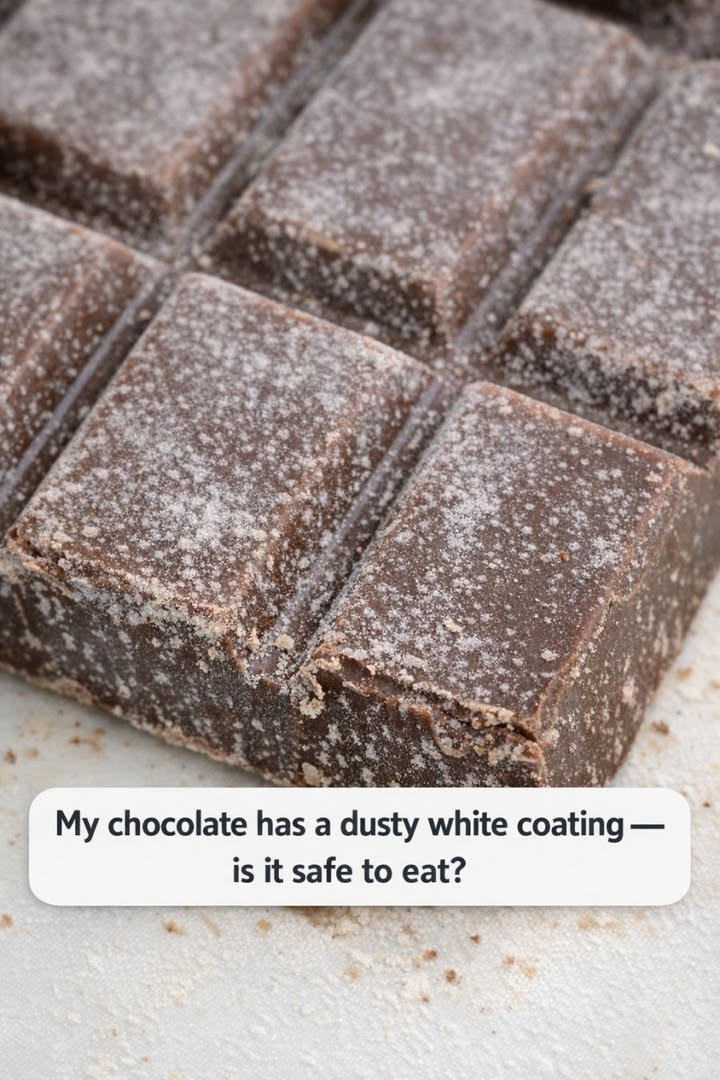
We've all experienced it: you open your favorite chocolate bar, anticipating that rich, smooth taste, only to find an unexpected, powdery white coating marring its surface. This phenomenon can be surprising, especially when you've stored the bar carefully or bought it recently. The good news is that this white coating is usually harmless and doesn't mean your chocolate is spoiled.
In this comprehensive article, we'll explore what causes this mysterious white film, known as 'bloom,' and whether it's safe to indulge in your chocolate despite its less-than-appetizing appearance. We'll also discuss how to prevent bloom and what to do if your chocolate has already developed this coating.
1. What Is That Dusty White Coating on My Chocolate?
The dusty white coating that sometimes appears on chocolate is known as 'bloom.' It can manifest as either a fat bloom or a sugar bloom. Fat bloom occurs when the fat, such as cocoa butter, in the chocolate separates and rises to the surface. This can happen due to changes in temperature, causing the chocolate to soften and then harden again, leaving a whitish film. Sugar bloom, on the other hand, occurs when moisture causes the sugar in the chocolate to dissolve and then recrystallize on the surface, resulting in a grainy texture.
Both types of bloom are quite common and are more about aesthetics than anything else. They are usually harmless, although they can affect the texture and mouthfeel of the chocolate.
2. The Science of Chocolate Bloom: Fat Bloom vs. Sugar Bloom
Fat bloom and sugar bloom occur due to different scientific processes. Fat bloom is the result of temperature fluctuations, where the cocoa butter within the chocolate melts and re-solidifies unevenly, leading to a dull and streaky surface. This type of bloom generally results from storing chocolate in a place where the temperature frequently changes, such as near a window or a frequently opened pantry.
Sugar bloom, however, is caused by moisture exposure. When chocolate is stored in a humid environment, the sugar dissolves in the moisture, and as the water evaporates, the sugar crystallizes on the surface of the chocolate. This type of bloom can often be felt as a rough texture on the chocolate. While both types of bloom alter the appearance of chocolate, they do not significantly affect its safety for consumption.
3. Is Bloomed Chocolate Actually Safe to Eat?
Yes, bloomed chocolate is safe to eat. The white coating does not indicate spoilage or contamination; rather, it is simply a result of the chocolate's physical properties changing due to environmental factors. The flavor might be slightly altered, especially in the case of sugar bloom, which can impart a grainy texture, but the chocolate remains edible.
It's important to distinguish bloom from mold, which is a different issue entirely. Bloom does not produce any off smells or significant color changes beyond the white coating, whereas mold will often have a distinctive odor and can appear in various colors.
continued on the next page